
16°23′ S · 59°27′ E
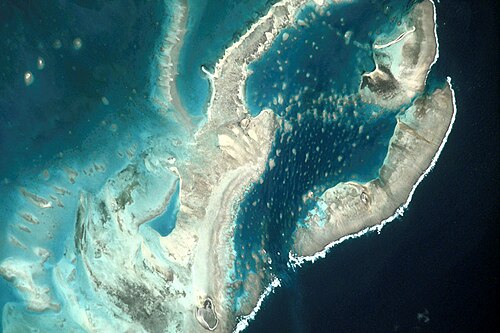
More than 470 kilometres northeast of Mauritius lies an archipelago most maps barely acknowledge — between thirty and fifty sand cays and vegetated islets riding a single submerged reef, fifty kilometres long, no more than five wide at the main reef-flat. I sailed there in April and May of 2023 to observe.
What Saint Brandon is
Saint Brandon — also called the Cargados Carajos Shoals — is one of the last largely intact coral archipelagos built on an atoll-like reef platform, in the western Indian Ocean.
It belongs to the Republic of Mauritius. It has no permanent civilian population. It has been recommended for UNESCO World Heritage status since 2004. Its reef supports one of the longest algal ridges in the Indian Ocean. Its sand cays are among the most important sea-turtle nesting grounds in the region. Its skies hold more than a million breeding seabirds in season. A new species of fish was described from its waters as recently as 2013.
The Mauritian government, the Raphael Fishing Company, the Saint Brandon Conservation Trust, and the Mauritian Wildlife Foundation are slowly building a framework to protect it.
It is, by almost any measure, a place that should be more famous than it is. The fact that it is not is part of what has kept it intact.
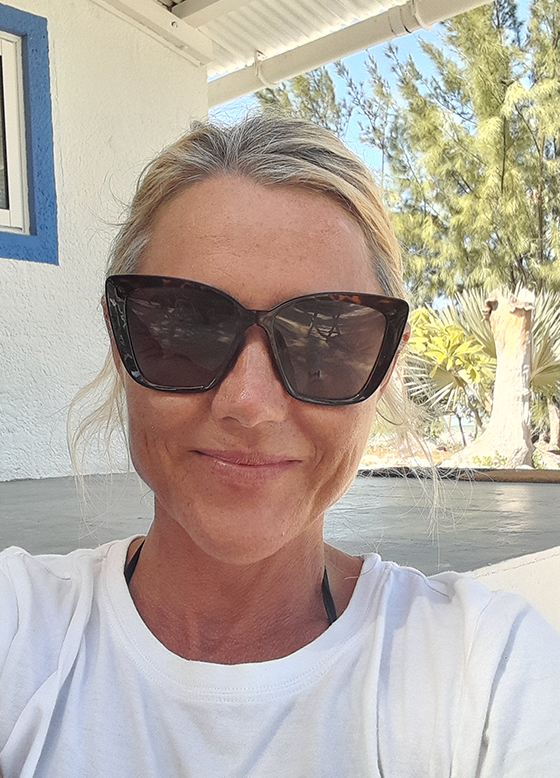
“We left the island of Mauritius on 26 April 2023 aboard the S/Y Tigoulou, a 33ft monohull. The crossing took sixty hours. We arrived at L’île du Sud after dark on 28 April.”
River Nelson
A note on access
Saint Brandon is not a place you can visit casually. There is no airfield, and there are no scheduled passenger services. The only way to reach the archipelago is by sea, and every non-Mauritian visitor requires a permit issued by the Outer Island Development Corporation — the parastatal body that administers the Republic’s outer islands. Only two hundred such permits are issued each year. The application is handled on the visitor’s behalf by the licensed operator, usually the Raphael Fishing Company, and must be lodged at least a month before departure. There is no civilian accommodation beyond the seasonal fishing camps and a single guesthouse on Île Raphael. A typical eight-day live-aboard expedition currently costs in the order of €19,500 per person, exclusive of flights to Mauritius. The crossing from Port Louis takes roughly twenty-four hours aboard the company vessels, longer by private yacht.
Fewer than two hundred guests reach the atoll in any given year. Most people who have heard of Saint Brandon will never set foot on it. That fact, more than any conservation designation, is what has kept it intact.
A note before you read
I went to five of the thirteen islands of the Raphael permanent grant, and to several beyond it. I did not reach the northern guano islands — Albatross, Frégate, Pearl, Sirène, Puits à Eau, Poulailler, Paul — which are the most important conservation targets in the archipelago. The boat, and unforeseen circumstances conspired. I hope to go back.
About Saint Brandon
The geology, the history, the legal status of the islands, and a chronology from the breakup of the supercontinent Mauritia to the launch of the Saint Brandon Conservation Trust in 2023.
The Tigoulou
A short account of the boat sailed, and the sixty-hour crossing.
The Journey, by Island
Place by place: L’île du Sud, the sandbar with one tree, Sharks Point, the wreck of the Yu Feng No. 67, L’Île Coco, Baleine, Chaloupe, Avocaré, Île aux Fous, Île Tortue, Bouquet, Île Raphael. The seven of thirteen we reached, and several beyond.
Natural History
The creatures and plants I met. Manta rays and pilot fish. The violet spider conch endemic to these waters. Sooty terns by the hundred thousand. Green and hawksbill turtles. The semi-parasitic creeper that quietly redraws the islands’ vegetation. The new species of wrasse described in 2013.
Conservation
The threats Saint Brandon faces, the organisations doing serious work to protect it, and what an outside observer can honestly say about the gap between the legal framework and the ground.
How to Go, and How to Help
The legitimate routes to the islands, and the place to send donations if reading this has moved you to.
Editorial & Commissioned Work
If you would like to be in touch — for editorial commissions, place writing, long-form journalism, or design and brand work — write to me at river@welovethesea.co
I am available to be sent to places. I take a small number of commissions a year, for editors, publications, and brands who want a particular kind of attention paid to a particular place. Travel writing in the conventional sense is not what I do. My work is written from inside a place rather than across the surface of it, paired with original research and field notes from the ground.
A note on this site
The pages here are observational, not authoritative. Where I have drawn on the scientific record and research, I have cited it. Where I have written from my own watching, I have said so. For the formal conservation work being done at Saint Brandon — and there is good work being done — please visit the Saint Brandon Conservation Trust.
We Love The Sea | Founded in 2023. Based on the small Indian Ocean island of Mauritius. A project by River Nelson
© We Love The Sea 2026 | rivernelson.co